
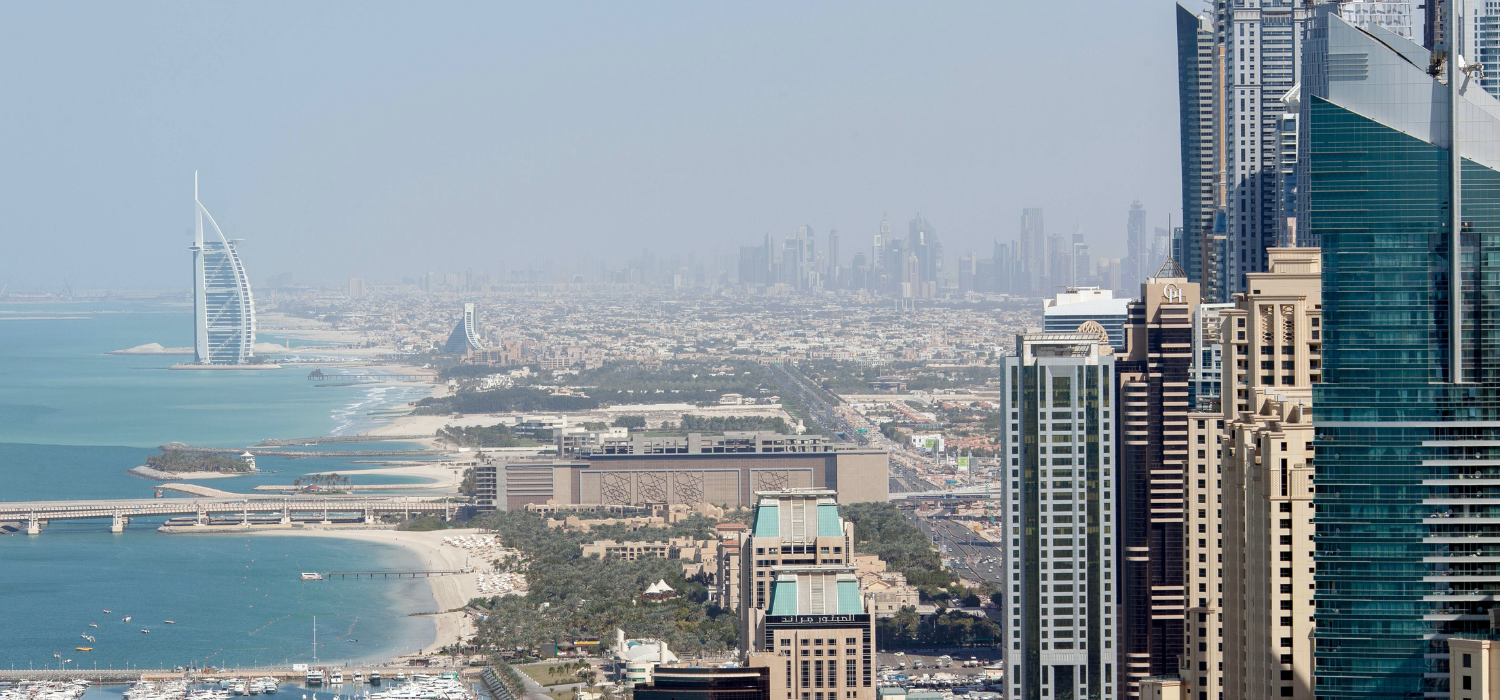
Residential rents have increased for the 15th consecutive quarter, report says
Communities in Dubai like Discovery Gardens, Dubai Sports City, Dubailand, and Jumeirah Village Circle saw the highest rental growth in the third quarter. This is because more tenants are choosing to live in affordable and mid-market areas, a report has shown.
Rents in Dubai have gone up for the 15th straight quarter and increased by 18% over the year, according to property consultancy Cushman and Wakefield Core.
Apartment rents went up by 19% annually, while villa rents saw a smaller increase of 13%. This shows that villa prices are starting to stabilize as they become more affordable, the research found. High-end areas like Palm Jumeirah and Dubai Marina saw smaller increases in rents, with single-digit growth.
There has also been a steady rise in lease renewals, which increased by 16% in the third quarter.
“The new Real Estate Regulatory Authority (RERA) rental calculator has helped reduce the gap between new and renewed rental rates. However, new leases are still about 14% higher than renewals,” the Cushman and Wakefield Core report said.
Dubai’s Real Estate Regulatory Authority updated its rent calculator earlier this year. The RERA calculator, which was updated on March 1 to better match current market prices, is updated regularly.
Abu Dhabi also launched its own residential rental index this year. This index provides rental values for tenants and landlords across the emirate and is available online on the Abu Dhabi Real Estate Centre’s website www.adrec.gov.ae.
Investment reforms and supportive business regulations are boosting Dubai’s real estate market, S&P Global Ratings said in a recent report. Factors like a growing population, residency reforms such as the golden visa, and high rents are encouraging people to buy property.
Dubai’s off-plan transaction volumes in the third quarter jumped by 51% compared to the same period last year, while sales in the secondary market rose by 19% year-on-year, according to Cushman and Wakefield Core data.
“In the third quarter, off-plan transactions were around 34,000, which is 2.3 times more than secondary market transactions,” Prathyusha Gurrapu, head of research and consultancy at Cushman and Wakefield Core, said.
“This shows that more people are choosing to buy properties that are still being built. This is mainly because of attractive payment plans and the increasing demand for property-linked visas.”
House prices across the city rose for the 17th straight quarter and saw a 20% increase over the year.
By market segment, villa prices rose by 23% year-on-year, while apartment prices increased by 19% compared to the same period last year.
High-end areas are seeing slower price growth and signs of stabilization at the top end of the market. In contrast, mid-market communities are experiencing strong double-digit growth in both villas and apartments, the report found.
About 9,157 residential units were delivered in the third quarter, bringing the total for the year so far to 22,900 units. An additional 10,700 units are expected in the fourth quarter, making the total for 2024 around 33,600 units, the consultancy estimated.
“While the supply in 2024 remains moderate, the development pipeline is speeding up, with many handovers expected over the next two to three years. This increase in supply may help stabilize the market,” the report said.
The ultra-prime segment remained strong with a 41% annual increase in the number of transactions. About 424 residential properties were sold above Dh20 million in Dubai in the third quarter. Palm Jumeirah was the most popular location for ultra-prime transactions.
“With growing demand from ultra-high-net-worth individuals for luxury properties, especially waterfront properties and branded residences, we expect this segment to stay strong as global wealth continues to move to Dubai,”
Ms. Gurrapu said.


