
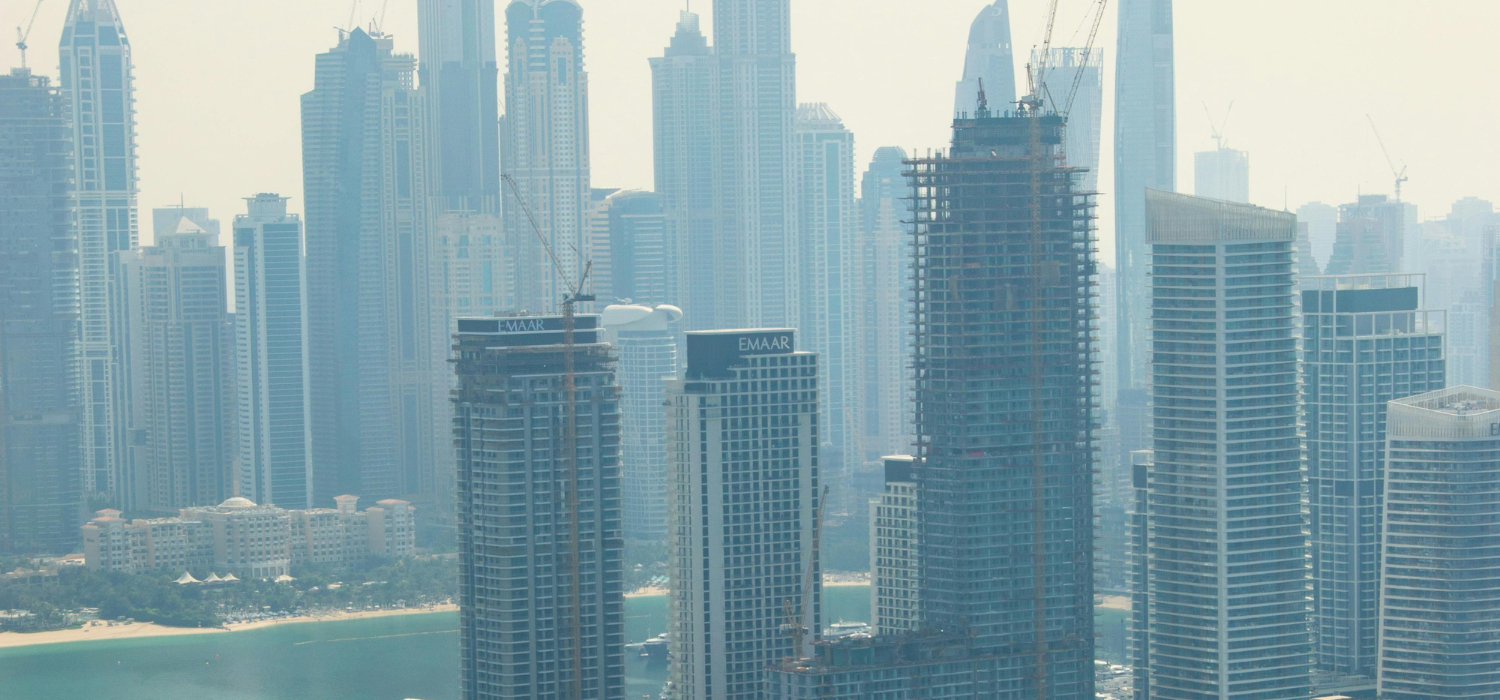
Dozens of companies have made their debut in the emirate this year, as demand remains high
Competition is increasing in Dubai’s property market as new developers join the scene, launching projects to meet the rising demand from buyers.
Amaal, founded by Abdulla Lahej, the former CEO of Emaar, entered the Dubai market this year, along with Kasco Developments, Acube Developments, Source of Fate, and PO B1 Properties.
“Out of the 40 new developers that have entered the market so far this year, about 50% are foreign companies coming to Dubai for the first time,” says Zhann Jochinke, COO at Cavendish Maxwell’s Property Monitor. “Competition is tough. So far this year, 142 developers have launched projects, compared to 125 in all of 2023.”
Amaal launched a Dh1.5 billion ($408 million) project called Amaal 8 in Mohammed bin Rashid City. The project will have 512 units, and the first phase is already sold out. According to Mr. Lahej, the development is expected to be completed by the end of 2028. “We have customers from all around the world, not just from this region.”
“About 50% of the new developers are foreign companies entering Dubai for the first time.”
Zhann Jochinke, COO, Property Monitor
The company plans to hold roadshows in China, Australia, and the UK to attract more customers. “New developers entering the market create a healthy competition, which benefits everyone,” Mr. Lahej says. “It’s good not to have just two or three developers controlling everything, as that would be a monopoly.”
Dubai-based Source of Fate, which is behind a Dh500 million project in Ras Al Khaimah, plans to launch Dh10 billion worth of projects in the next year. These projects will be built in Ras Al Khaimah and Dubai, with full funding already secured, says General Manager Majid Hsiung.
Meanwhile, PO B1 Properties, the new real estate division of Saif Al Ghurair Real Estate Group, announced a Dh206 million project in Dubai Silicon Oasis, set to be completed by the second quarter of 2027. The Serenova project will cover 7,850 square meters and include 222 apartments.
Acube Developments, in turn, plans to launch three or four projects worth Dh1.5 billion in 2025, in Dubai and Ras Al Khaimah.
Kasco Developments, a part of the family-owned Kasco Group, also unveiled a Dh500 million project in Business Bay. “Even though the competition is growing, there is still plenty of room for new companies to make their mark,” says Mustafa Al Kaissi, chairman of Kasco Developments.
The key, he says, is to focus on “creating unique and innovative products that meet customers’ specific needs.” This approach helps new developers carve out a niche in a crowded market.
Room for more
The entrance of these new developers comes as the UAE property market continues to thrive, supported by new government initiatives, such as residency permits for retirees and remote workers, and strong economic growth.
In the third quarter, average prices in the Dubai residential market rose by about 20% compared to last year, with a 19% increase in apartment prices and a 23% rise in villa prices, according to a report from CBRE.
From January to September 2024, the total number of residential transactions in Dubai surpassed 125,000, a 36% increase compared to the same period in 2023. The total value of deals rose 34% to Dh314 billion.
Demand for real estate is at record levels. Cavendish Maxwell’s latest Property Monitor report shows that over 20,000 property transactions took place in October, the highest monthly figure ever, with 73% of them being off-plan units.
“The market is definitely open for new developers, as we continue to set new records in sales and values,” says Matthew Green, Head of Research – MENA at CBRE. “While it’s a higher-risk environment since we’re four years into an up-cycle, transaction volumes and values still show strong demand. The Dubai property market’s success continues.”
Luxury boom:
One area that is seeing significant growth is luxury residential property. In the third quarter, the prime villa market in Dubai saw annual capital gains of 38.1%, while premium apartment prices rose by 24.7%, according to a report from ValuStrat.
The demand is coming from ultra-high-net-worth individuals moving to Dubai. Global high-net-worth individuals are expected to spend $4.4 billion on Dubai real estate this year, a 76% increase from last year, says Knight Frank.
Dubai’s luxury home market reached new heights in 2023, with sales of homes over $10 million nearly doubling to $7.6 billion, outpacing both London and New York, according to a separate report from Knight Frank.
“While the Dubai real estate market is growing like never before, units are still being absorbed quickly,” says Mr. Jochinke. “Well-known developers are selling most of their units on launch day, while newer developers take a bit longer to sell, but still succeed.”
Aldar Properties, for example, sold the first two phases of its Athlon project in Dubai within 48 hours, generating Dh4.1 billion in sales. In September, Samana Developers sold their two projects, Samana Ocean Pearl 1 and Samana Ocean Pearl 2 on Dubai Islands, within two hours of launch.
Investor protection:
On the regulatory side, requirements for developers have become stricter. They must meet certain conditions before registering and launching projects for sale. One key requirement related to project finance is ensuring protection for investors.
“Before off-plan sales can begin, developers must provide a minimum 30% guarantee,” says Mr. Jochinke. This could be in the form of completing 30% of construction, providing a 30% bank guarantee, or depositing 30% cash in the RERA (Real Estate Regulatory Authority) escrow account.
Looking ahead, Mr. Lahej expects demand from investors to remain strong, with sales momentum continuing into next year. “Despite the ups and downs of the real estate market from 2008 to 2012, Dubai always comes out on top,” he says. “We hope this momentum will continue, and the positive signs so far suggest it will.”


